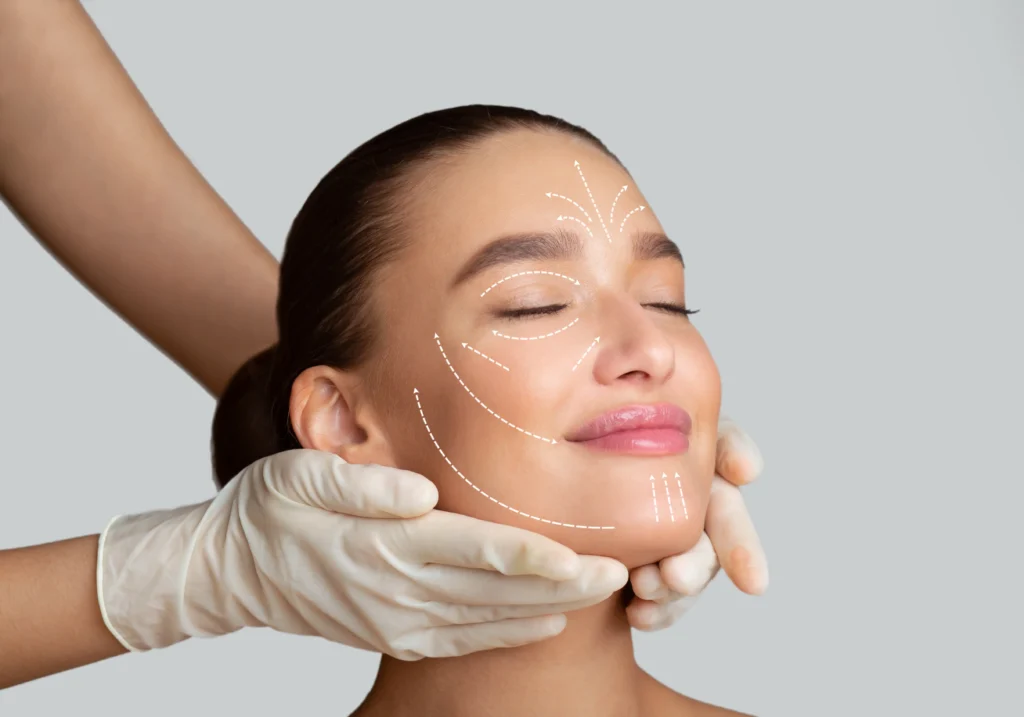
Medically reviewed by Professor Sandip Hindocha, GMC-registered Consultant Plastic Surgeon and NHS Clinical Director. Articles are reviewed against current UK guidance from the GMC, BAAPS, BAPRAS and NICE.
TL;DR:
- Aesthetic medicine involves both surgical and non-surgical procedures aimed at enhancing appearance.
- Regulation varies; surgical treatments require CQC registration, while non-surgical treatments are less regulated.
- Safety depends on provider qualifications, governance, and informed decision-making by patients.
Aesthetic medicine is frequently lumped together with beauty salons, spa treatments, and even dentistry in the public imagination. In reality, it is a distinct field with specific clinical definitions, legal frameworks, and safety standards that vary significantly depending on whether a procedure is surgical or non-surgical. Many people seeking cosmetic enhancements in the UK are unaware of how much the quality of their outcome depends not just on the procedure itself, but on who performs it, where, and under what governance. This guide cuts through the confusion to help you understand what aesthetic medicine actually covers, how UK regulation works, and how to make confident, well-informed decisions about your care.
Key Takeaways
| Point | Details |
|---|---|
| Aesthetic medicine scope | It covers both surgical and non-surgical cosmetic treatments aimed at enhancing appearance, distinct from reconstructive care. |
| Provider qualifications matter | Choose regulated professionals with proper training and registration for the safest outcomes. |
| Regulation protects patients | New licensing rules, CQC checks, and voluntary registers are improving safety across all types of aesthetic procedures in England. |
| Ask before you decide | Always check provider credentials, understand risks, and don’t rush into aesthetic treatments. |
| Mental wellbeing counts | Aesthetic procedures can help confidence, but expectations and decision-making should always consider mental health. |
What is aesthetic medicine in the UK?
The term “aesthetic medicine” can feel vague, and that is partly because it genuinely covers a wide spectrum. At its core, aesthetic medicine refers to medical and clinical procedures designed to enhance or alter a person’s appearance rather than to treat illness or injury. As the NHS clarifies, cosmetic procedures change appearance rather than treat disease, and the NHS draws a firm distinction between cosmetic and reconstructive surgery.
This distinction matters. Reconstructive surgery aims to restore normal function or appearance following injury, illness, or congenital conditions. Aesthetic or cosmetic procedures, by contrast, are elective. They are chosen by the patient with the goal of improving how they look or feel about themselves. Neither is inherently superior; they simply serve different purposes.
Within aesthetic medicine, the divide between surgical and non-surgical treatments is significant. Surgical options include procedures such as breast augmentation, rhinoplasty (nose reshaping), abdominoplasty (tummy tuck), and blepharoplasty (eyelid surgery). Non-surgical options encompass treatments like botulinum toxin injections (commonly called Botox), dermal fillers, laser hair removal, chemical peels, and skin rejuvenation therapies. You can explore the full range of surgical versus non-surgical procedures to see how they compare in practice.
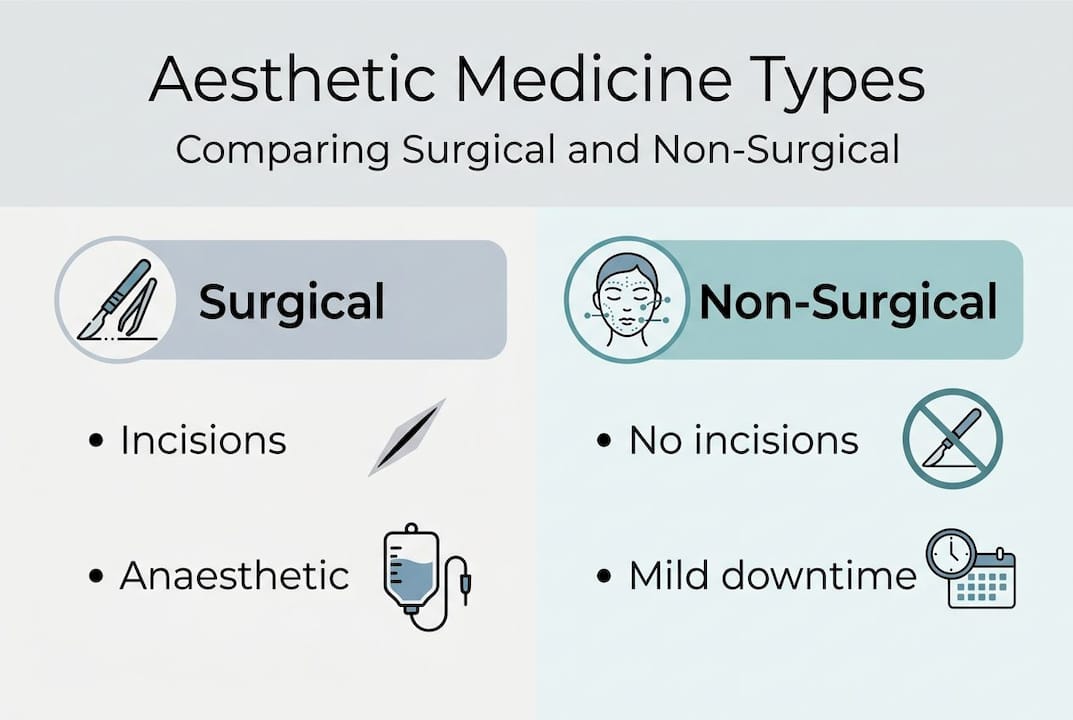
Here is a quick overview of common aesthetic medicine treatments:
| Category | Examples |
|---|---|
| Surgical | Breast augmentation, rhinoplasty, facelift, liposuction |
| Non-surgical injectables | Botulinum toxin, dermal fillers, fat dissolving injections |
| Non-surgical energy-based | Laser hair removal, radiofrequency, ultrasound tightening |
| Skin treatments | Chemical peels, microneedling, mesotherapy |
One important and often overlooked point: no comprehensive definition for non-surgical cosmetic procedures currently exists in England, and these treatments are generally considered non-invasive. This regulatory gap has real consequences for patients, because it means the standards applied to someone injecting your face with filler may differ dramatically from those applied to a surgeon performing a rhinoplasty.
“Understanding what aesthetic medicine actually covers is the first step to making safe, empowered decisions about your appearance.”
For those wanting to understand aesthetic medicine explained in the context of specific skin treatments and outcomes, it helps to see how both surgical and non-surgical approaches fit into a broader care plan.
Surgical and non-surgical options: What’s the practical difference?
Once you understand the landscape, the next question is what these differences mean for you in practice. The gap between surgical and non-surgical is not just about needles versus scalpels. It encompasses regulation, provider qualifications, risk levels, and aftercare requirements.
Surgical procedures involve incisions, often require general anaesthetic, and carry risks including infection, scarring, and complications from anaesthesia. Non-surgical treatments are typically performed without cutting the skin, use injectables or energy-based devices, and have shorter recovery times. However, “non-surgical” does not mean “safe.”

Here is how the two compare across key factors:
| Factor | Surgical | Non-surgical |
|---|---|---|
| Invasiveness | High (incisions, anaesthetic) | Low to moderate |
| Regulation | CQC registration required | Evolving; currently limited |
| Provider range | Doctors, surgeons | Doctors, nurses, beauticians |
| Recovery time | Weeks to months | Hours to days |
| Risk level | Higher | Lower but not absent |
| Longevity of results | Long-term | Often temporary |
Surgical cosmetic clinics must be CQC-registered in England, and provider skills, training, and insurance are critical factors in safe outcomes. The Care Quality Commission (CQC) is the independent regulator of health and social care in England, and its registration provides a meaningful baseline of assurance.
For non-surgical treatments, the picture is more complex. Current regulation is evolving and there is no single definition or comprehensive list of non-surgical cosmetic procedures under existing law. This means a trained medical professional and an unqualified beautician can both legally offer certain injectable treatments, though the risks differ enormously.
When evaluating surgical and non-surgical criteria, consider these steps before booking:
- Confirm the clinic’s CQC registration for surgical treatments.
- Check the provider’s medical qualifications and indemnity insurance.
- Ask specifically about their training in the procedure you want.
- Request to see before-and-after photos of their own patients.
- Verify they have a clear aftercare and complication management protocol.
Pro Tip: Never judge a provider by their social media following or the aesthetics of their clinic alone. A beautifully decorated treatment room is not a substitute for clinical governance and proper training. When choosing the right plastic surgeon, credentials and experience should always come first.
How safety and quality are assured: Registration and the new licensing scheme
Safety in aesthetic medicine does not happen by accident. It is the product of regulation, governance, and the ethical commitment of individual providers. Understanding how the UK currently ensures quality will help you ask better questions and spot warning signs.
For surgical procedures, the CQC provides the primary layer of oversight. Clinics must meet specific standards covering hygiene, staffing, patient records, and clinical governance. Provider governance and registration are the practical benchmarks for quality, far more reliable than any marketing claim.
For non-surgical treatments, the situation has historically been weaker. Voluntary registers exist for practitioners offering injectables and other treatments, and membership of these registers signals a commitment to professional standards. However, membership is not mandatory, and not all registers carry the same weight.
The UK government is addressing this gap. A proposed licensing scheme for non-surgical cosmetic procedures will improve standards for education, training, and infection control, with risk-tiered categories for different procedures. The scheme introduces a traffic-light style classification:
- Green tier: Lower-risk treatments; broader provider eligibility with basic training requirements.
- Amber tier: Moderate-risk procedures; stricter training and oversight required.
- Red tier: Higher-risk treatments; must be performed by or under the supervision of a regulated healthcare professional.
Local authorities will oversee licensing in their areas, creating a more consistent national framework. This is a significant step forward for patient protection.
What should you look for when assessing a provider’s credentials?
- Membership of a recognised professional body (such as the British Association of Aesthetic Plastic Surgeons).
- Proof of relevant medical or clinical training.
- Valid professional indemnity insurance.
- A clear complaints and aftercare process.
- Transparency about realistic outcomes and limitations.
Pro Tip: Ask to see a provider’s indemnity insurance certificate before booking. A reputable clinic will share this without hesitation. For surgical procedures, always verify that the clinic is GMC-registered plastic surgeon safety compliant and that expert surgeon consultations are part of the process before any treatment begins.
Decision-making, wellbeing and what to ask before treatment
Regulation and credentials matter enormously, but the quality of your experience also depends on your own decision-making process. Rushing into a procedure, or choosing one for the wrong reasons, can lead to disappointment even when the clinical outcome is technically sound.
The NHS is clear on this point: do not rush your decision and walk away if you feel pressured or unsure. Cosmetic demand intersects directly with mental wellbeing, and it is important to reflect honestly on your motivations before committing to any treatment.
Aesthetic procedures can genuinely boost confidence and improve quality of life for many people. However, they are not a solution to deeper emotional difficulties, relationship problems, or issues with self-worth rooted in other areas of your life. A trustworthy provider will explore this with you during consultation, not simply take your booking.
“A good provider will ask as many questions as you do. If they don’t, that tells you something important.”
Before agreeing to any procedure, ask your provider the following:
- What are your specific qualifications and how long have you been performing this procedure?
- What are the realistic risks and potential complications?
- What does the aftercare process involve and who do I contact if something goes wrong?
- How many times have you performed this specific treatment?
- What results can I realistically expect, and what are the limitations?
- What happens if I am unhappy with the outcome?
You always have the right to delay or decline. No ethical provider will pressure you to commit on the day of consultation. Understanding what cosmetic surgery recovery involves beforehand also helps set realistic expectations. Browsing popular cosmetic procedures can help you identify what genuinely interests you before your first consultation.
Our perspective: What most aesthetic medicine guides overlook
Most guides in this space focus on procedures: what they are, how they work, and what they cost. What they rarely address is the uncomfortable truth that the single biggest variable in your outcome is not which procedure you choose. It is who performs it and under what governance framework.
We have seen patients arrive having had non-surgical treatments at unregulated venues, experiencing complications that required corrective surgical intervention. The procedures themselves were not inherently dangerous. The lack of proper training, aftercare, and clinical oversight made them so.
Transparency matters too. Honest expectation-setting from a qualified provider transforms patient satisfaction far more than any technical advancement. When a consultant takes time to explain limitations, discuss alternatives, and genuinely assess whether a procedure is right for you, the entire experience shifts.
When reviewing surgical and non-surgical criteria, remember this: no cosmetic procedure is ever strictly safe. Even a straightforward injectable treatment carries risk in the wrong hands. Trust your instincts. If a consultation feels rushed, a price feels suspiciously low, or a provider seems reluctant to answer your questions fully, walk away.
Thinking about aesthetic enhancements? Safe next steps
If this guide has helped clarify your thinking, the natural next step is speaking with a qualified, regulated professional who can assess your individual needs and goals.
At Lux Plastic Surgery, Professor Sandip Hindocha and his team offer expert consultations across Bedford, London, and Manchester, covering a full range of surgical and non-surgical procedure options. Whether you are exploring your options for the first time or ready to move forward, our approach prioritises your safety, wellbeing, and realistic outcomes above all else. You can learn how to start evaluating surgery options safely or browse our range of top cosmetic procedures to find the right starting point for your journey.
FAQ
Is aesthetic medicine different from cosmetic surgery?
Yes. Aesthetic medicine includes both surgical and non-surgical cosmetic treatments, while cosmetic surgery refers only to surgical procedures. As the NHS distinguishes, many cosmetic procedures are non-surgical and sit outside the traditional surgical category entirely.
Who can perform aesthetic medicine procedures in the UK?
Surgical procedures must be performed by regulated, registered professionals in CQC-registered clinics. For non-surgical treatments, provider requirements vary and regulation is being tightened with a new licensing scheme for non-surgical cosmetic procedures currently being introduced.
What questions should I ask before having an aesthetic procedure?
Ask about the provider’s qualifications, experience with the specific procedure, risks, and aftercare arrangements. The NHS advises checking training and qualifications before agreeing to any treatment.
Are non-surgical cosmetic procedures safe?
Safety depends heavily on the provider’s training and the specific procedure involved. The UK government’s licensing scheme aims to raise standards and reduce risks across non-surgical cosmetic treatments.
Will a cosmetic procedure improve my mental health?
Cosmetic procedures can boost confidence, but they will not resolve deeper mental health issues. The NHS emphasises mental wellbeing and advises against assuming aesthetic treatments will solve wider personal difficulties.