Medically reviewed by Professor Sandip Hindocha, GMC-registered Consultant Plastic Surgeon and NHS Clinical Director. Articles are reviewed against current UK guidance from the GMC, BAAPS, BAPRAS and NICE.
TL;DR:
- Non-surgical body contouring offers minimal downtime and is suited for mild to moderate concerns.
- Significant weight loss often requires surgical procedures for skin laxity correction.
- Personalised treatment plans, guided by clinician expertise and safety protocols, ensure optimal results.
Surgery is no longer the default answer when it comes to reshaping your body. In 2026, UK body contouring is shifting rapidly, driven by new technology, changing patient expectations, and a surge of people managing their bodies after using GLP-1 weight loss medications such as Ozempic and Wegovy.
Whether you are based in Bedford, London, or Manchester, the options available to you this year are more varied, more personalised, and more effective than at any point before. Understanding what is available, and how to choose wisely, can make all the difference to your results.
Key Takeaways
| Point | Details |
|---|---|
| Non-surgical options rising | In 2026, UK demand is shifting towards non-surgical body contouring treatments with quicker recovery and less downtime. |
| Personalisation is critical | Clinics now prioritise bespoke planning and Fitzpatrick-safe protocols for best results across all skin types. |
| Surgery still needed sometimes | Following major weight loss or when significant excess skin is present, surgical contouring may offer the most effective solution. |
| Expert consultation counts | Choosing an established local clinic with FDA-cleared technology and expert guidance ensures safety and outcome quality. |
What is shaping body contouring trends in 2026?
The body contouring landscape in Britain has changed significantly over the past few years. A growing number of people want visible results without lengthy recovery times, and clinics have responded by investing in advanced non-surgical technology. That does not mean surgery is obsolete. It means patients now have a much wider menu to choose from, and the best clinics help you select the right option for your specific situation.
Several forces are reshaping the field right now:
- GLP-1 medications: Millions of people across the UK have lost significant weight using drugs such as semaglutide. Many are now left with excess skin and areas of stubborn fat that neither diet nor exercise will shift.
- Demand for minimal downtime: Working professionals in London, Manchester, and Bedford cannot always take weeks off for recovery. Non-surgical solutions with minimal downtime are in high demand because of this practical reality.
- Holistic enhancement: Patients increasingly want a combination of fat reduction, muscle definition, and skin tightening rather than a single procedure. Clinicians now plan multi-modal treatment programmes accordingly.
- Regional personalisation: Clinics in Bedford, London, and Manchester are tailoring their approach based on local demographics, lifestyle, and patient goals. There is no one-size-fits-all solution.
“The most significant shift we are seeing in 2026 is patients arriving better informed and expecting treatments that are built around their life, not just their body.”
The rise of social media education has meant patients come to consultations with specific questions and, sometimes, specific requests. That is largely a positive development. It means clinicians spend less time explaining the basics and more time designing truly bespoke plans. The key is learning to evaluate body contouring options safely before committing to any treatment pathway.
Ultimately, the 2026 trend is not about a single treatment going viral. It is about a whole-patient approach, where the right combination of techniques is selected for each individual’s goals, health status, and lifestyle.
Non-surgical vs surgical body contouring: Comparing options
Understanding the influences, let’s see how surgical and non-surgical options compare for those seeking results in 2026.
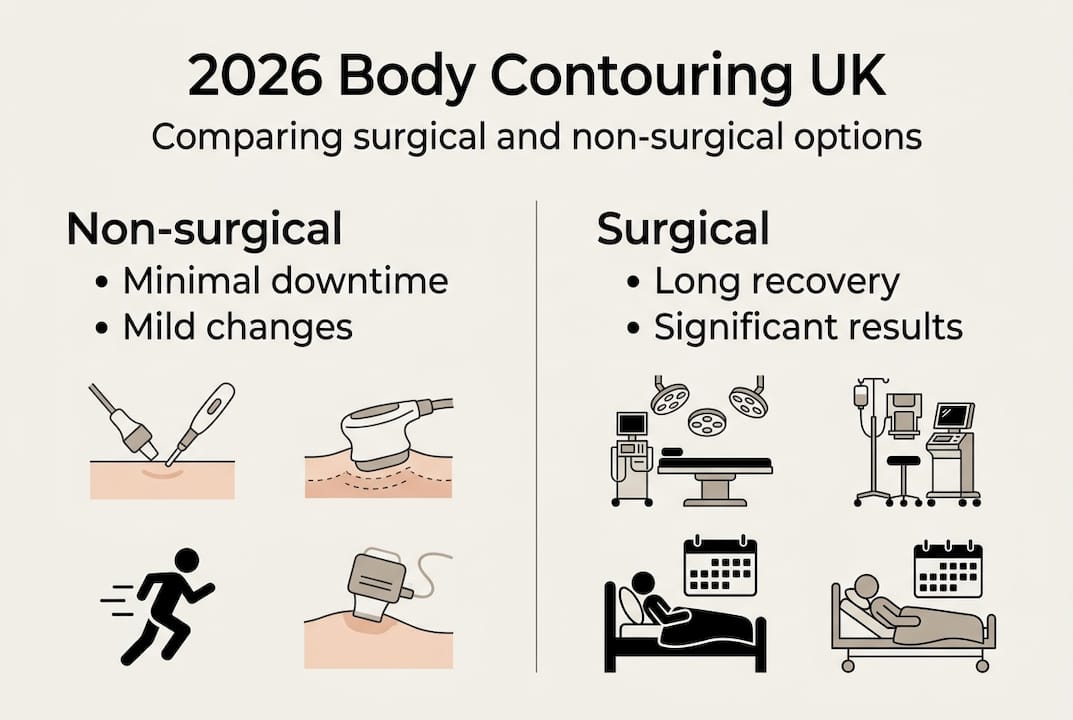
The distinction between surgical and non-surgical body contouring matters more now than ever. Each approach has clear strengths, and your personal circumstances should guide the choice.
| Feature | Non-surgical | Surgical |
|---|---|---|
| Recovery time | Minimal to none | Several weeks |
| Results timeline | Gradual (weeks to months) | More immediate |
| Skin laxity correction | Limited | Excellent |
| Fat reduction | Moderate | Significant |
| Anaesthesia required | No | Yes |
| Best for | Mild to moderate concerns | Significant weight loss or laxity |
Non-surgical treatments such as cryolipolysis (fat freezing), radiofrequency skin tightening, and high-intensity focused electromagnetic (HIFEM) muscle stimulation are well-suited to people with mild to moderate concerns. They are particularly popular with patients who want to refine rather than transform. Non-surgical approaches are favoured for minimal downtime, though surgical solutions may be necessary for those who have lost a significant amount of weight.
Surgical options, including liposuction, abdominoplasty (a tummy tuck), and body lift procedures, address issues that no machine can fully resolve. Loose skin after major weight loss requires physical removal. These procedures carry more risk and require recovery time, but for the right patient, the results are meaningful.
Clinics using FDA-cleared technology ensure that the devices themselves meet rigorous safety standards. But device safety alone is not enough. The skill and experience of the clinician operating that device matters enormously.
Pro Tip: If you are unsure which category you fall into, start with a consultation rather than researching treatments online. An experienced clinician can assess your skin, your tissue quality, and your goals far more accurately than any algorithm.
For those exploring personalised body contouring in Bedford or other UK locations, the consultation process is where your treatment plan truly begins. Working with GMC-registered plastic surgeons ensures your safety and the quality of your outcomes.
Skin laxity, post-weight loss, and who should choose surgery
Having compared the options, let’s focus on specific situations, especially after dramatic weight changes.
Skin laxity is the defining factor for many people choosing between non-surgical and surgical body contouring. When skin loses its elasticity, whether through ageing, pregnancy, or rapid weight loss, no amount of radiofrequency or ultrasound energy will make it snap back fully. This is a biological reality, not a marketing gap.
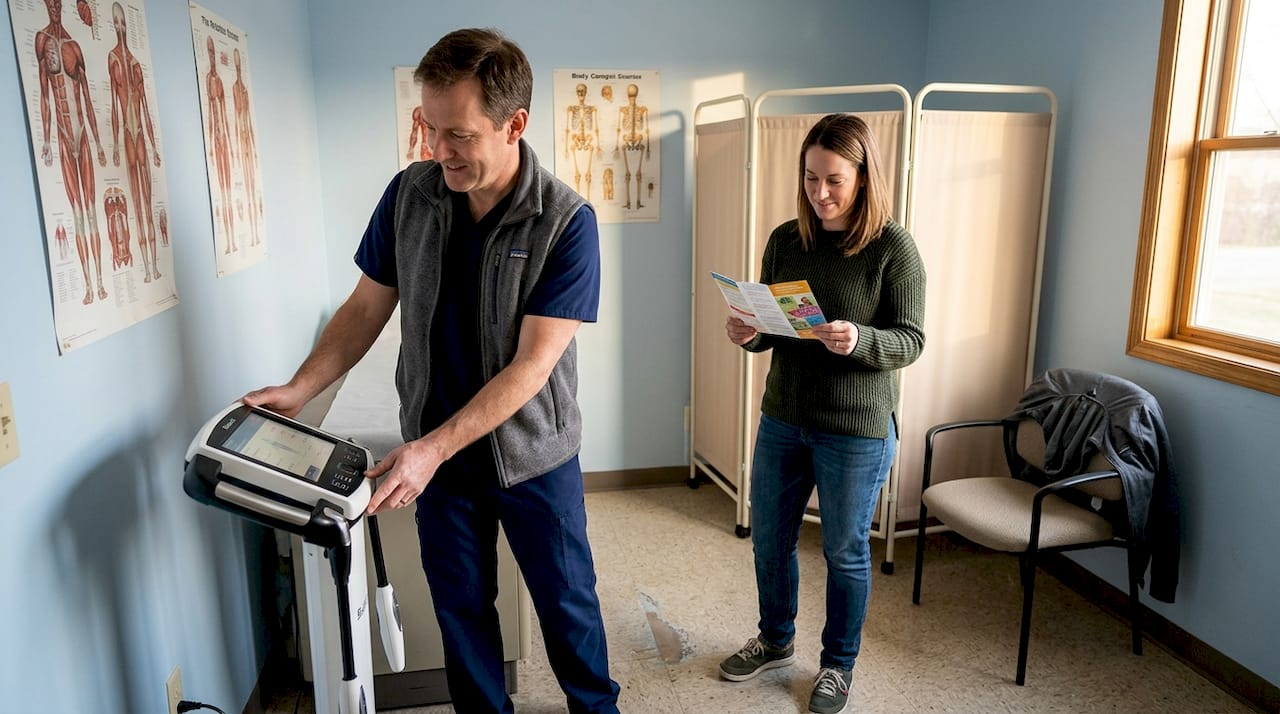
For patients who have completed a course of GLP-1 medication and lost a substantial amount of weight, the situation is particularly nuanced. Post-GLP-1 clients with significant weight loss may require surgery for skin laxity, especially when BMI exceeds 30, where non-surgical results are often limited.
Here is a simple guide to help you understand how body composition and weight change affect your options:
| Scenario | Recommended approach |
|---|---|
| Mild fat deposits, firm skin | Non-surgical (e.g., cryolipolysis) |
| Moderate laxity, stable weight | Combination approach |
| Significant weight loss, loose skin | Surgical (e.g., body lift, abdominoplasty) |
| Post-GLP-1 with BMI over 30 | Surgical assessment essential |
Timing also matters enormously. Weight must be stable before any body contouring procedure, surgical or otherwise. Starting treatment too soon after stopping GLP-1 medication can compromise your results and increase your risk of complications.
Key considerations for post-weight loss patients include:
- Waiting until weight has been stable for at least three to six months
- Ensuring nutritional status and protein levels are adequate before surgery
- Understanding that body contouring after weight loss may require a staged approach rather than a single procedure
- Setting realistic expectations about scarring, particularly with body lift surgery
The best results come when patients approach this journey with patience. A staged plan, reviewed at each step, almost always outperforms a single rushed procedure.
Personalising treatments and ensuring safety for every patient
With unique needs in mind, here is how modern clinics personalise care to deliver safe, outstanding results.
Personalisation in body contouring is not a luxury. It is a clinical necessity. Two patients with similar goals and similar body types may need entirely different treatment plans based on their skin tone, medical history, lifestyle, and realistic availability for recovery.
One of the most important frameworks now used in specialist UK clinics is Fitzpatrick-safe protocol planning. The Fitzpatrick scale classifies skin types from Type I (very fair) to Type VI (very dark). Some body contouring technologies, particularly those using laser or intense light energy, carry a higher risk of pigment changes in darker skin tones if not calibrated correctly. Established UK clinics now personalise body contouring using Fitzpatrick-safe protocols, ensuring that every patient is treated with appropriate technology and settings.
A well-structured treatment journey typically follows these steps:
- Initial consultation: Review of medical history, goals, and lifestyle. Physical assessment of skin quality and fat distribution.
- Treatment planning: Selection of appropriate modalities, surgical or non-surgical, including timing and sequencing.
- Treatment delivery: Using only calibrated, clinically appropriate technology, operated by trained practitioners.
- Review and optimisation: Follow-up appointments to assess progress, adjust the plan, and address any concerns.
Pro Tip: Ask your clinic specifically which Fitzpatrick categories their devices are cleared for. If they cannot answer, that is a red flag.
Expert-led care in Bedford, London, and Manchester combines FDA-cleared technologies with tailored planning to optimise safety and outcomes. When safely selecting body contouring treatments, prioritising clinics that offer a structured, multi-step process will always serve you better than those promising instant results.
Why tailored technology and expertise matter more than hype
Every few months, a new body contouring device gets a wave of media attention and suddenly everyone wants it. The honest truth is that no single technology is universally superior. What delivers exceptional results is the clinician who understands when to use it, on whom, and how to combine it with other treatments.
There is a common misconception that buying the most expensive or most publicised treatment guarantees the best outcome. It does not. A device used incorrectly, or on an unsuitable candidate, will disappoint every time. The real value in any clinic lies in clinical judgement, not the brochure.
Local consultations beat generic online offers for this exact reason. A clinician who can examine your tissue quality, listen to your goals, and factor in your recovery capacity will always produce better results than a package deal assembled from trend reports. Understanding high-quality aesthetic enhancements starts with recognising that expertise is the ingredient no machine can replace.
The clinics setting the standard in 2026 are not those with the longest list of devices. They are the ones with the depth of knowledge to use fewer tools, better.
Explore expert body contouring options in your area
If reading this has given you clarity about where you stand, the next step is a conversation with a specialist who can assess your situation properly.

At Lux Plastic Surgery, Professor Sandip Hindocha and his team offer bespoke consultations across Bedford, London, and Manchester. Whether you are curious about body contouring in Bedford or want to compare surgical and non-surgical options before making any decisions, the team is equipped to guide you clearly and honestly. You can also explore plastic surgery options to better understand the full range of treatments available to you. Your journey starts with a consultation, not a commitment.
Frequently asked questions
Are non-surgical body contouring treatments effective for everyone?
Non-surgical contouring works best for those with a BMI under 30, where fat deposits are moderate and skin elasticity is reasonable. Those with significant skin laxity after GLP-1 use or major weight loss typically achieve better results through surgery.
How soon after major weight loss can body contouring be considered?
Body contouring is usually considered when weight has been stable for at least three to six months, particularly after GLP-1-induced weight loss. Stable weight ensures safer procedures and more predictable, lasting results.
What does it mean for a clinic to use Fitzpatrick-safe protocols?
Fitzpatrick-safe protocols are safety measures tailored to different skin types, reducing the risk of pigment changes and other complications. Personalising for skin type is now considered essential practice in specialist UK body contouring clinics.
Are body contouring trends different across the UK?
The broad move towards non-surgical methods is consistent across the UK, but local clinics in Bedford, London, and Manchester may offer distinct technologies and a more personalised level of care based on their patient demographics and clinical expertise.