Medically reviewed by Professor Sandip Hindocha, GMC-registered Consultant Plastic Surgeon and NHS Clinical Director. Articles are reviewed against current UK guidance from the GMC, BAAPS, BAPRAS and NICE.
TL;DR:
- Thorough consultations are crucial for safety and satisfaction in cosmetic surgery.
- UK regulations ensure credential verification, cooling-off periods, and comprehensive risk assessment.
- Effective consultations involve honest dialogue, suitability screening, and realistic expectation setting.
Most people focus on choosing the right procedure or finding a skilled surgeon, yet the consultation process is arguably the single greatest predictor of whether you will be satisfied with your cosmetic surgery outcome. UK guidelines recommend thorough consultations, cooling-off periods, and credential checks before any procedure goes ahead.
The consultation is where safety is established, expectations are shaped, and suitability is honestly assessed. Skip or rush this stage, and even technically flawless surgery can leave you feeling disappointed, anxious, or worse. This article explains exactly why the consultation matters so much, what a high-quality one looks like, and how to use it to protect yourself throughout your cosmetic journey.
Key Takeaways
| Point | Details |
|---|---|
| Consultation is crucial | Thorough consultations underpin safety, satisfaction, and clear expectations in UK plastic surgery. |
| Screening protects patients | Consultations identify unsuitable candidates and reduce risks, including psychological issues and unrealistic goals. |
| Local clinics are safer | UK-regulated consultations offer lower complication rates than cosmetic tourism and better long-term outcomes. |
| Expect a two-way conversation | Effective consultations involve honest, open discussions—not just form-filling or sales messaging. |
Why consultations matter: The foundation of safe cosmetic surgery
A consultation is far more than a formality before you sign a consent form. It is the first line of defence for your safety and your satisfaction. Regulatory bodies including BAPRAS, BAAPS, the GMC, and the NHS all require that patients receive a proper consultation, a mandatory cooling-off period, and the opportunity to verify their surgeon’s credentials before proceeding. These requirements exist because surgery without proper preparation causes real harm.
Satisfaction rates correlate directly with surgeon-patient contact and information provision. In other words, the more thoroughly your surgeon communicates with you before the procedure, the more likely you are to feel positive about the result.
“69% overall satisfaction is directly linked to surgeon contact and information provision during the consultation process.”
When you evaluate surgery options safely, you protect yourself against unsuitable procedures, mismatched expectations, and avoidable complications. A quality consultation aligns what you want with what is realistically achievable.
The contrast between UK-regulated consultations and those offered through cosmetic tourism is stark:
| Feature | UK-regulated consultation | Cosmetic tourism (e.g., Turkey) |
|---|---|---|
| Surgeon credentials verified | Yes, GMC-registered | Often unverifiable |
| Cooling-off period | Standard (minimum 2 weeks) | Rarely offered |
| Psychological screening | Required | Frequently absent |
| Aftercare planning | Included | Often not provided |
| Complaint and redress options | NHS and legal routes available | Very limited |
The NHS cosmetic procedure advice is clear: always verify your surgeon’s registration and never feel pressured to proceed quickly. A good way to remember the essentials is the 5 C’s:
- Change: Be clear about what you want to change and why
- Check surgeon: Verify credentials and professional registration
- Consultation: Attend a full, unhurried consultation
- Cool off: Take the recommended cooling-off period
- Clinic: Confirm the facility meets regulated standards
With the importance of a thorough consultation established, it is essential to understand what this process should, and should not, involve.
What happens in a plastic surgery consultation?
A real consultation is a structured conversation, not a sales meeting. Every UK consultation for body contouring, breast surgery, or facial procedures should cover your goals, medical history, current medications, lifestyle factors, realistic outcomes, alternatives to surgery, and the risks specific to your case. Surgeon consultations and safety go hand in hand, and any clinic that glosses over these areas should raise immediate concern.
One useful framework is the SAGA approach, which supports informed consent and expectation management in aesthetic practice:
- Screen: Assess the patient’s physical and psychological suitability
- Assess: Review medical history, current health, and risk factors
- Guide: Discuss realistic outcomes, alternatives, and risks honestly
- Agree: Reach a shared, informed decision before any procedure is booked
Here is a step-by-step breakdown of what a thorough consultation typically looks like:
- Initial enquiry: You contact the clinic and share your area of interest. A good clinic will ask preliminary questions before booking.
- Pre-consultation paperwork: You complete a medical history form and may be asked about your motivations.
- Face-to-face meeting with the surgeon: Your goals are discussed in detail. The surgeon examines the area of concern.
- Risk and alternatives discussion: The surgeon explains what is realistically achievable, what the risks are, and whether non-surgical options may be appropriate.
- Credential and facility review: You are given the opportunity to ask about the surgeon’s qualifications and the clinic’s accreditation.
- Cooling-off period: You leave without pressure to decide. A minimum two-week gap before any procedure is standard and strongly recommended.
- Follow-up and agreement: If you choose to proceed, a further meeting confirms consent and aftercare planning.
When selecting cosmetic procedures safely, the consultation is where you gather the information you need to make a genuinely free choice.
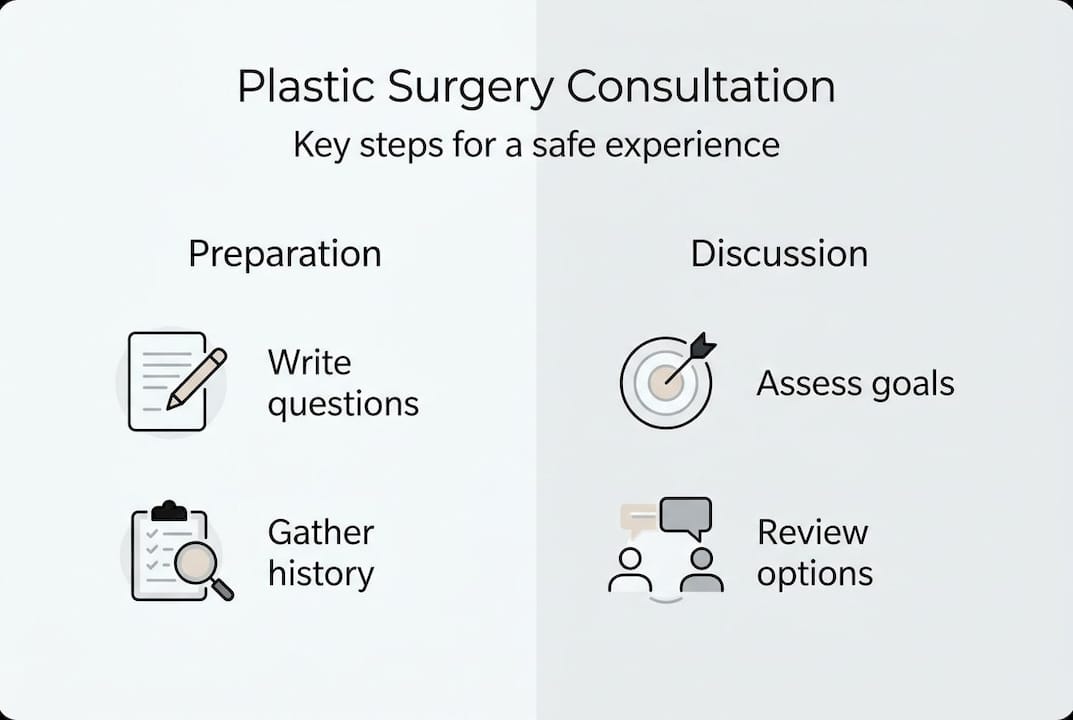
Pro Tip: Write down your questions before you attend. Include what you hope to achieve, what concerns you, and what your daily life looks like post-surgery. The best surgeons actively welcome this kind of prepared, honest dialogue.
Now that you understand the structure, assessing suitability and honesty on both sides is just as vital.
Setting expectations and screening for suitability
A consultation is not simply about consent. It is a two-way suitability assessment. Your surgeon has a professional and ethical obligation to say no when the risks of a procedure outweigh its benefits for you specifically. Standardised consultations exist precisely to protect patients from procedures they should not have.
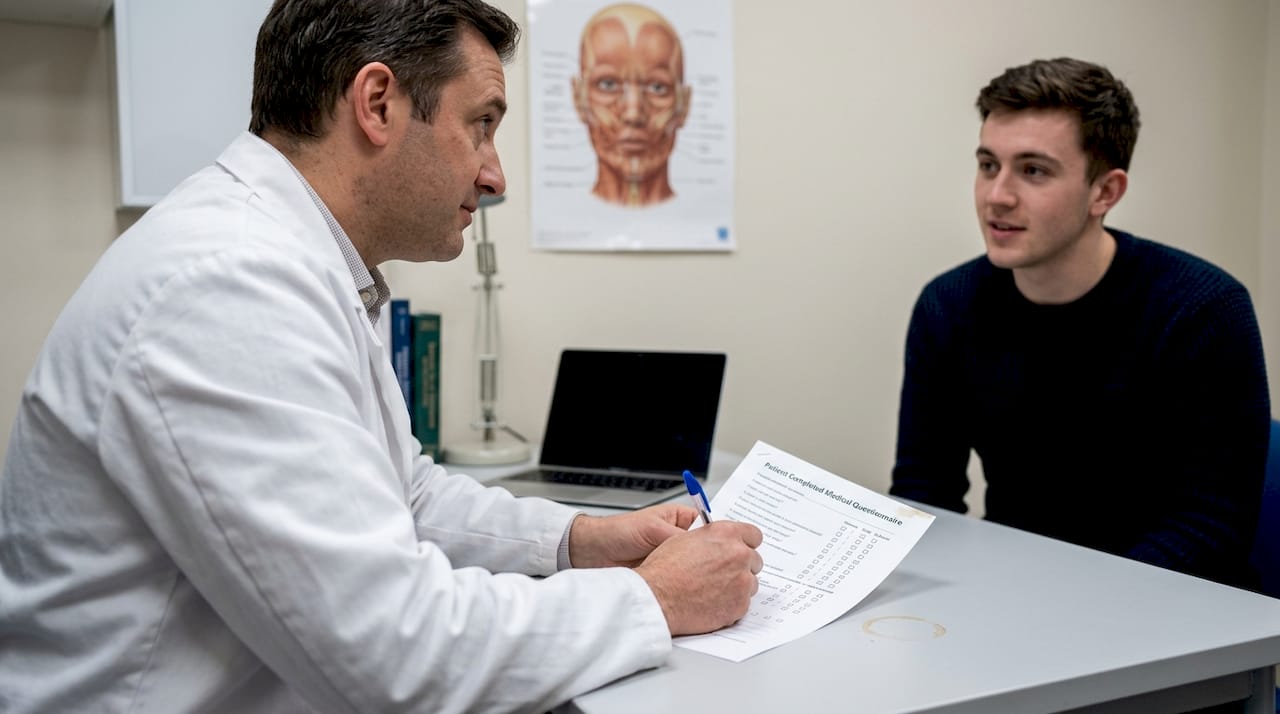
One of the most important screening areas is body dysmorphic disorder (BDD), a condition where a person becomes preoccupied with perceived flaws that others cannot see. BDD prevalence reaches up to 18.6% in cosmetic surgery patients, and satisfaction rates are significantly lower in smokers and those with a psychiatric history. A psychological evaluation is therefore a legitimate and necessary part of the consultation process.
| Patient factor | Impact on satisfaction |
|---|---|
| Realistic expectations | Strong positive correlation |
| History of BDD | Significantly lower satisfaction |
| Active smoker | Higher complication and dissatisfaction risk |
| Psychiatric history | Requires careful screening and may delay surgery |
| Strong social support | Associated with better recovery and satisfaction |
Signs that you may not currently be a suitable candidate include:
- Seeking surgery primarily to please someone else
- Expecting surgery to resolve emotional distress or relationship problems
- Being unable to accept that results may be imperfect
- Having a recent significant life event such as bereavement or divorce
- Presenting with symptoms consistent with BDD
A reputable surgeon will also assess whether you meet the criteria for surgical versus non-surgical treatment. Sometimes a less invasive option achieves a better outcome for your specific situation.
Pro Tip: If a surgeon seems eager to book you in without asking critical questions about your mental health, motivations, or medical history, treat that as a warning sign. A second opinion from a GMC-registered surgeon is always a reasonable step.
Consultation, risks, and the reality of cosmetic tourism
Robust UK consultations do not just set expectations. They actively reduce the risk of surgical complications. For a procedure such as abdominoplasty (tummy tuck), the complication rate in UK-regulated settings sits at 2 to 4%. That figure rises dramatically when patients travel abroad for cheaper alternatives.
“96% of surgical complications requiring NHS follow-up stem from procedures undertaken abroad, with Turkey identified as a primary source.”
The financial cost to the NHS from treating cosmetic tourism complications has exceeded £110,000 in a single study cohort. The personal cost, in terms of pain, scarring, additional surgery, and psychological distress, is harder to quantify but often far greater.
What UK consultations typically include that is frequently absent abroad:
- Pre-operative blood tests and health assessments
- Verified surgeon credentials and GMC registration
- Standardised consent processes with cooling-off periods
- Detailed, written aftercare instructions
- Access to a named surgeon for post-operative concerns
- Clear complaints and redress procedures
The appeal of lower costs abroad is understandable. But when you factor in the potential cost of corrective surgery, NHS treatment, time off work, and long-term health consequences, the savings rarely hold up. Understanding what to expect during cosmetic surgery recovery is itself part of a responsible consultation, and it is a conversation that is far less likely to happen in an overseas setting.
The key questions to ask your surgeon published by BAPRAS are an excellent starting point for any consultation, wherever you are considering having treatment.
What most people miss about cosmetic surgery consultations
After years of working in cosmetic surgery, one thing stands out clearly: the patients who experience the best outcomes are not always those who had the most technically complex procedures. They are the ones who arrived at their consultation ready to have an honest conversation.
A consultation should be a genuine two-way exchange. No amount of surgical skill can compensate for mismatched expectations or unaddressed psychological needs. We have seen patients who looked objectively excellent after surgery but remained dissatisfied because the consultation never properly explored what they were really hoping to achieve.
“True satisfaction comes when patients are fully informed and empowered, not just transformed.”
Research confirms that lasting insecurities can persist even after successful surgery when psychological needs are not properly addressed beforehand. This is why careful screening matters as much as surgical technique.
The patients who benefit most are those who treat the consultation as an opportunity to be completely open, even if that openness leads to a decision not to proceed. That outcome, when it is the right one, is itself a success. Explore latest cosmetic surgery insights to stay informed as you consider your options.
Explore safe, expert-led consultations in the UK
If this article has shown you anything, it is that the consultation is where your cosmetic journey either gains a solid foundation or begins to go wrong. Choosing a clinic that takes this stage seriously is the most important decision you will make.
At Lux Plastic Surgery, every patient receives a personalised, unhurried consultation with Professor Sandip Hindocha, following the ethical frameworks set by BAPRAS, BAAPS, and the NHS. Whether you are exploring body contouring services, researching how to go about choosing the right plastic surgeon, or seeking clarity on aesthetic medicine guidance, our team is here to guide you with honesty and expertise from your very first enquiry.
FAQ
How long should I wait after a plastic surgery consultation before deciding?
The standard recommendation in the UK is a minimum two-week cooling-off period between consultation and procedure. This gives you time to reflect without pressure.
Why do some people get turned down for cosmetic surgery?
Surgeons may decline patients with unrealistic expectations, body dysmorphic disorder, or health risks that outweigh procedure benefits. This is an ethical duty to protect patient wellbeing, not a rejection.
What questions should I ask during my plastic surgery consultation?
Ask about your surgeon’s credentials, expected results, risks, aftercare, and whether a cooling-off period is standard. BAPRAS provides a checklist of key questions to help you prepare.
Is UK plastic surgery safer than going abroad?
Yes. UK plastic surgery is generally safer due to regulated consultations and significantly lower complication rates. 96% of complications requiring NHS follow-up stem from procedures carried out abroad.